
Technology Integration in Agriculture is Luxury or Necessity
As global population projections near 9.8 billion by 2050 (www.un.org), the pressure on our food systems intensifies. To meet the growing global demand for food sustainably, agriculture is undergoing a profound transformation. The integration of advanced technologies, often called Smart Farming or Agriculture 4.0, is enabling farmers to produce more with less, enhancing productivity, efficiency, and environmental stewardship.
Technology integration in agriculture is not a luxury but a necessity. By embracing precision tools, automation, data analytics, and biotechnology, we can create a sustainable, productive, and resilient food system capable of feeding the world. The time to act is now – through innovation, collaboration, and strategic investment.
Precision Agriculture: Doing More with Less
Precision agriculture uses technologies like GPS, sensors, and data analytics to optimize resource use. It enables farmers to apply water, fertilizers, and pesticides only where needed, reducing waste and environmental impact. For example, variable rate technology (VRT) can tailor fertilizer application to soil needs, boosting efficiency. Benefits include:
- Higher profitability through increased yields or reduced input costs.
- Environmental protection by minimizing chemical runoff into waterways.
Automation and Robotics: Addressing Labor Shortages
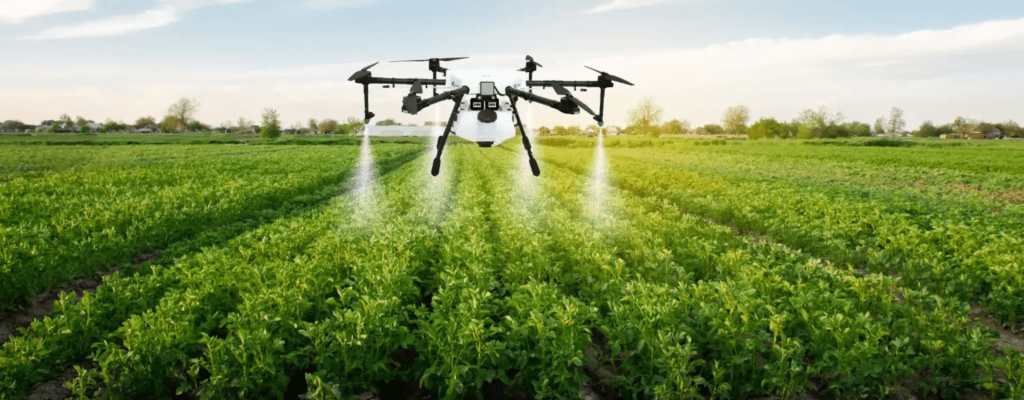
Labor shortages are a critical challenge, but automation offers solutions. Autonomous tractors, robotic weeders, and automated harvesters can perform tasks with precision and speed. For instance, drones can spray fertilizers and pesticides over 50 acres in just one day, a task that traditionally took far longer and used more quantities. This can reduce labor dependency and operational costs while improving timeliness.
Data-Driven Insights: AI and IoT
Making decisions is being transformed by the Internet of Things (IoT) and artificial intelligence (AI). Sensors monitor soil moisture, temperature, and crop health in real time, while AI algorithms analyze data to predict disease outbreaks or optimize planting schedules. For example:
- AI-driven pest detection can reduce pesticide use up to 25%.
- IoT systems provide precise irrigation control, conserving water and improving crop health.
Genetic Advancements: CRISPR and Climate Resilience
Climate change demands crops that withstand droughts, pests, and extreme weather. CRISPR gene-editing technology develops climate-resilient varieties with higher yields and improved nutritional profiles. These innovations are crucial for adapting to changing environments and ensuring stable production.
Overcoming Adoption Barriers
Despite its potential, technology adoption faces hurdles:
- Smallholders are discouraged by high upfront expenses and unclear returns.
- Farmer education and support are necessary to solve training and trust issues.
- Digital infrastructure gaps in rural areas limit access.
Initiatives like government subsidies, simplified user interfaces, and peer-learning programs can mitigate these challenges.
Examples of Success
Drone technology has cut the foliar application of pesticide and fertilizers uses up to 25% and reduced application time from hours to minutes.
To Harness Technology for Food Security:
- Invest in Infrastructure: Expand rural broadband and power access to support digital tools.
- Promote Inclusive Policies: Offer financial incentives and training for smallholders.
- Encourage Collaboration: Governments, tech companies, and farmers must work together to develop scalable, affordable solutions.
In essence, technology is empowering farmers to move from intuition-based decisions to data-driven ones, cultivating a new era of smarter, more productive, and sustainable agriculture.