
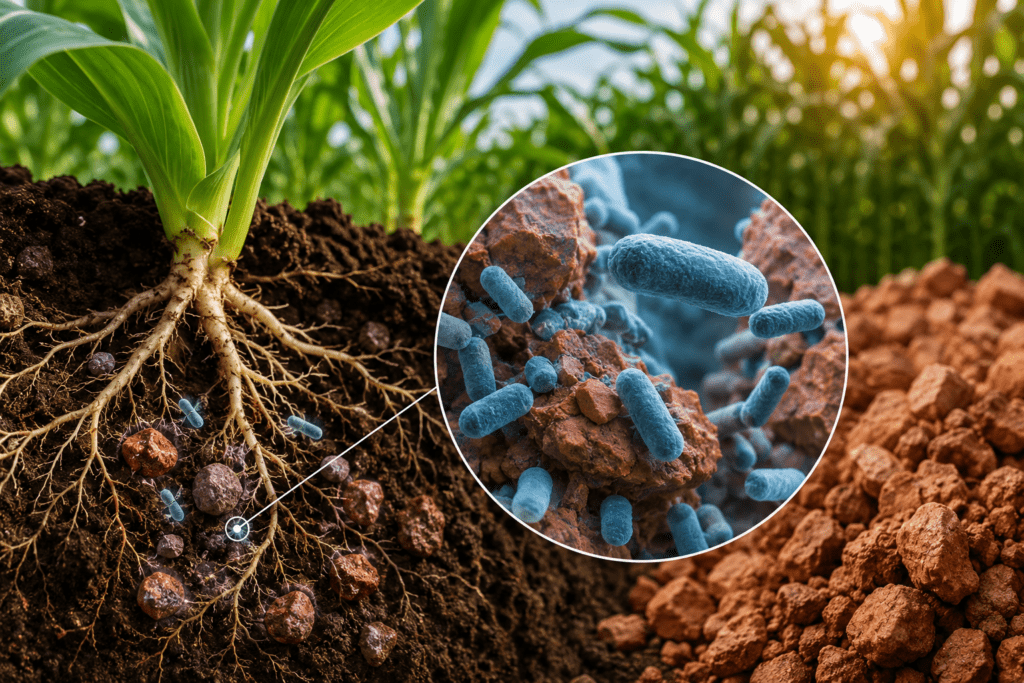
Potash Mobilising Bacteria (KMB): Unlocking Soil Potassium for Better Crop Growth
Introduction
Potassium is one of the three major nutrients required for plant growth. Although soil contains large reserves of potassium, much of it remains unavailable to plants. Potash Mobilising Bacteria (KMB) help convert locked potassium into forms that plants can absorb.
What are Potash Mobilising Bacteria?
KMB are beneficial soil microorganisms that release potassium from minerals such as feldspar, mica and illite, making it available to crops.
How Do KMB Work?
Potash Mobilising Bacteria use several mechanisms to release potassium –
1. Production of Organic Acids
KMB produces organic acids that dissolve potassium-containing minerals and release potassium ions into the soil solution.
2. Acidification of the Root Zone
The bacteria reduce soil pH around the roots, helping to break down mineral structures containing potassium.
3. Production of Chelating Compounds
Certain bacterial metabolites help release nutrients trapped in soil particles.
4. Root Zone Colonization
KMB establish a beneficial relationship with plant roots, continuously enhancing nutrient availability throughout the crop cycle.
Benefits of KMB
Enhanced potassium availability, improved crop growth, better drought tolerance, higher yield and quality, reduced fertilizer dependency, and improved soil health.
Crops Benefiting from KMB
Field crops, horticultural crops, vegetables, plantation crops, and many other agricultural crops can benefit from KMB application.
Application Methods
Seed treatment, seedling root dip, soil application with FYM or compost, and drip irrigation application.
Best Conditions for Effectiveness
Maintain soil moisture, add organic matter, use recommended doses, and practice balanced nutrient management.
KMB in Sustainable Agriculture
As fertilizer costs continue to increase, farmers are looking for eco-friendly and cost-effective solutions. Potash Mobilising Bacteria offer a sustainable approach to improve potassium nutrition by utilizing the soil’s natural nutrient reserves. When integrated with balanced fertilization and good agronomic practices, KMB can contribute to improved nutrient-use efficiency, healthier crops, and better farm profitability.
Conclusion –
Potash Mobilising Bacteria are valuable biofertilizers that help unlock unavailable potassium present in the soil. By improving potassium availability, enhancing crop growth, increasing yield quality, and supporting sustainable agriculture, KMB provides farmers with an environmentally friendly tool for better nutrient management. Incorporating KMB into crop production systems can help maximize the benefits of both soil fertility and fertilizer investments.
References –
Meena et al., 2014; Etesami et al., 2017; FAO Plant Nutrition Guidelines.
Etesami, H., Emami, S., Alikhani, H.A. (2017). Potassium solubilizing bacteria (KSB): Mechanisms, promotion of plant growth, and future prospects. Journal of Soil Science and Plant Nutrition.